

Supporting Children to Thrive in Everyday Life
If you’ve ever caught yourself thinking “Is this just a phase, or should I look into this?” — you’re not alone. Many parents reach out to us feeling unsure, worried, or even guilty for noticing something feels a little harder for their child than it should be. The truth? Paying attention is a strength.
At The Capability Psychology & Wellness here in South Brisbane, Pediatric Occupational Therapy (OT) exists to support children exactly where they are — not to “fix” them, but to help them thrive. Whether your child is struggling with handwriting, coordination, emotional regulation, social skills, or everyday tasks like getting dressed or organising their school bag, OT offers practical, evidence-based strategies that build lifelong confidence and capability.
Let’s break it down — no jargon, no overwhelm.
What Is Pediatric Occupational Therapy? (In Plain English)
Pediatric OT helps children develop the skills they need to participate meaningfully in home life, school and their community. For kids, “occupations” aren’t jobs — they’re things like playing with friends, getting dressed, holding a pencil, managing big feelings, following routines, and feeling comfortable in their body.
These skills fall under a few key areas:
- Fine motor skills (handwriting, using scissors, tying shoelaces)
- Gross motor skills (balance, coordination, strength)
- Sensory processing (managing sound, light, movement, textures)
- Self-care skills (feeding, dressing, toileting)
- Emotional regulation
- Social and play skills
An occupational therapist looks at how a child moves, feels, focuses and copes in their daily world, then supports them through fun, practical activities that make life feel easier and more enjoyable.
If you’re curious about our holistic approach, you can explore our therapy philosophy and broader services here:
👉 Counselling & Psychology Services
Signs Your Child May Benefit From Occupational Therapy
Every child develops differently — and that’s completely okay. OT isn’t about labels; it’s about support. Some common signs parents notice include:
Movement & Coordination
- Clumsiness or frequent tripping
- Difficulty with scissors, buttons, or handwriting
- Avoiding sports or playground equipment
Sensory Differences
- Big reactions to noise, textures, or clothing
- Seeking constant movement (can’t sit still)
- Becoming overwhelmed in busy environments
Emotional & Self-Regulation Challenges
- Intense meltdowns or difficulty calming down
- Trouble with transitions or changes in routine
- Big feelings that feel hard to manage
Daily Living Skills
- Struggling with dressing, eating, or hygiene
- Difficulty following routines independently
- Needing lots of support for age-appropriate tasks
If you’re noticing a pattern — especially if it’s impacting your child’s confidence — OT can help.
What Happens During a Pediatric OT Session?
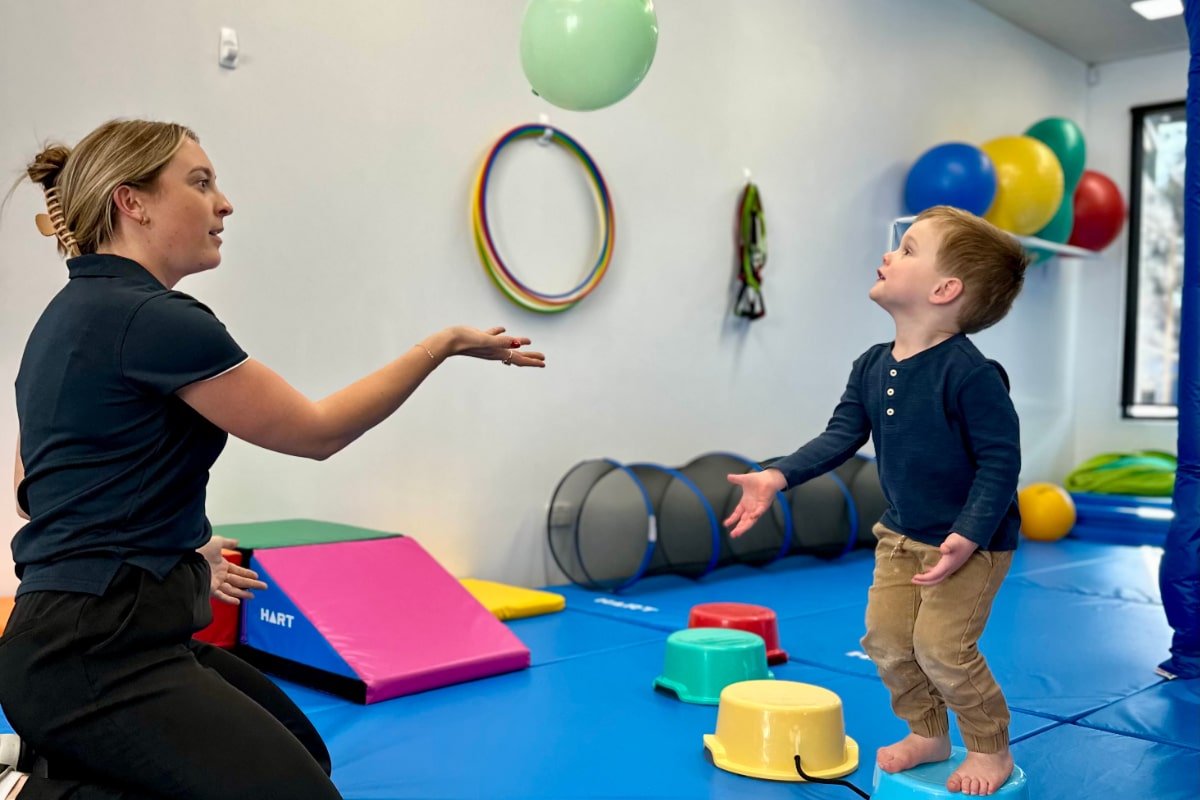
Here’s the part parents love: it doesn’t feel like therapy to kids. Sessions are tailored around your child’s interests so they actually enjoy coming, and are typically:
- Play-based (games, obstacle courses, crafts)
- Strengths-focused (building on what your child enjoys)
- Goal-driven (based on real-life challenges)
Your child might be climbing, swinging, drawing, building, or role-playing — all while developing balance, coordination, attention and emotional regulation. Parents are often included so you can confidently support your child’s progress between sessions.
Key Areas Pediatric OT Supports
- Fine Motor Skills — handwriting, cutting, drawing, and self-care tasks like buttons and zips
- Gross Motor Skills — running, jumping, balance and coordination
- Sensory Processing — understanding and responding to sound, touch and movement in a manageable way
- Emotional Regulation — recognising feelings, calming the body, coping with frustration or change
- Independence & Confidence — feeling capable in everyday tasks at home, school and socially
The Power of Early Support
Research consistently shows that early intervention sets children up for stronger long-term outcomes — academically, emotionally and socially. According to the American Occupational Therapy Association (AOTA), sensory integration and regulation are foundational skills that impact participation in everyday activities like learning, play and relationships.
🔗 External resource: https://www.aota.org/
If you’re a parent navigating this space for the first time, the Raising Children Network is a wonderful, evidence-based resource:
🔗 External resource: https://raisingchildren.net.au/
How The Capability Psychology & Wellness Can Support Your Family
As a multidisciplinary clinic, we take a holistic approach to child wellbeing — considering environment, family dynamic, sensory needs, emotional world and learning style. Our therapists work closely with:
- Parents and carers
- Teachers and schools
- Paediatricians
- Speech therapists and psychologists (when needed)
We work closely with parents and caregivers because progress doesn’t stop when sessions end. You’ll receive practical strategies you can use at home, school-friendly regulation tools, clear explanations (no jargon, promise), and ongoing support and check-ins — so your child’s support system feels unified, consistent and empowering.
Want to meet the people who’ll be supporting your child?
👉 Meet Our Team
Final Thoughts
Every child deserves to feel capable, confident and understood. Pediatric OT offers the tools, strategies and support to help them get there — and to give families the reassurance and clarity they’ve been longing for.
If you’re curious, concerned, or simply wanting to better understand your child’s needs, we’d love to chat and guide you through your options. You’re doing an amazing job, and you don’t have to do this alone.
Free Resources
We believe everyone deserves access to helpful tools and guidance.
Download free worksheets and guides here: Free Resources
Where to Get Help
If you’re in crisis or need immediate support, call Lifeline on 13 11 14 (available 24/7).
At The Capability Psychology & Wellness, our team is here to support your whole family through life’s challenges, big and small.
Leave a Reply